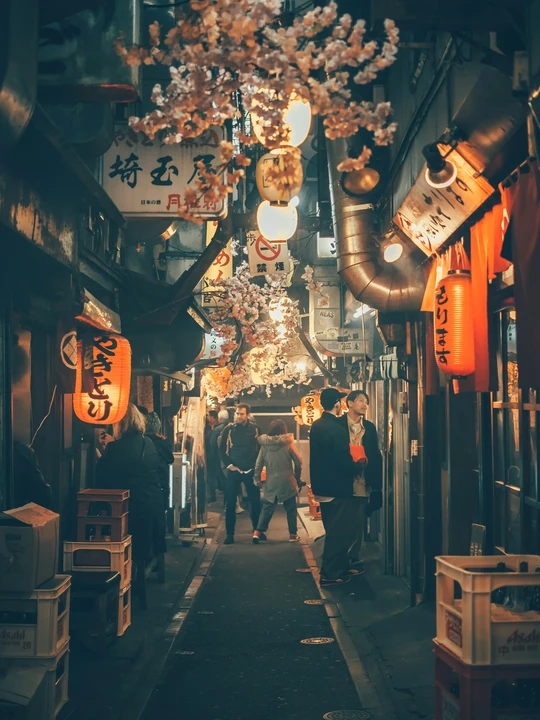
Like The Emperor Of Japan
As the group of middle-aged Japanese businessmen gathered into a huddle and began their deliberations in earnest, I watched in mute fascination. All of them impeccably attired in their suits, polished leather shoes, briefcases in hand, committed their utmost attention to deliberate the most serious matter at hand—giving me directions to Akihabara station.
The year was 2005, and I was in Tokyo on my first solo, independent travel anywhere outside India. I had submitted a paper to the PacSec Cybersecurity conference, which was duly not selected (as I expected). Nevertheless, the conference organizers made a generous offer. To quote them: For showing the courage to submit a paper, we are pleased to offer you a free pass for the 2-day event and the after-conference dinner party each day.
Loath to let go of such a fantastic opportunity to visit a country I had read and watched so much about, I maxed out my credit card, navigated a rude Indian official at the Japanese (yes, an Indian official in the Japanese embassy visa counter), and got my visa.
Before I knew it, I was on a Thai Airways flight to Narita, Tokyo, with a stopover in Bangkok, another fascinating city.
That morning, someone had suggested Akihabara’s electric town as a must-see place. The gentleman specifically mentioned Yodobashi, a huge electronic store. So, I had set off from my lodgings at Olympic Youth Hostel in Yoyogi and had taken a metro line to an interchange station. But, unlike most Tokyo metro stations, this station did not have signage in English. I was stumped. Seeing a group of distinguished-looking middle-aged Japanese businessmen, I approached one of them and bowed deeply (which my friend had advised me to do at every possible opportunity).
He returned my bow in earnest and looked at me askance. I asked in my best Queen’s English:
“Could you kindly direct me to the line that I must take to reach Akihabara?”
His puzzled look conveyed that he did not understand. So, I kept the Queen aside (and my ego too) and simply asked;
“Akihabara… how?”
He understood immediately.
Though he endeavoured to respond in English, from his pained expressions, I could tell that his deep grasp of the Japanese language (with an educated Japanese knowing anywhere between 2,000 to 3,000 kanji characters) didn’t necessarily extend to English. Maybe his Japanese intellect did not find it challenging enough—after all, what is 26 letters compared to a couple of thousand kanji?
An idea struck him. He raised one finger, indicating that he needed a minute. The highly-acknowledged Japanese team spirit would be on display shortly.
He bowed and marched back to his group and muttered something very seriously to them. They all turned to look at me and bowed slightly as if acknowledging this serious matter. It was a gesture of assurance that my problem, trivial as it may seem in other parts of the world, wouldn’t be so here, in Tokyo, Japan!
To lend the matter their undivided attention, they placed their business briefcases on the floor and formed a huddle. I watched in mute fascination as they all bowed their heads in concentration and started the deliberations. I noticed emphatic gestures with fingers, pushing home a serious point. Someone was drawing an imaginary map, in the air, and another was putting markers on it. Some agreed; some disagreed. One of them, with a deep frown, nodded thoughtfully, rubbing his chin while digesting all the shared intelligence regarding the best route to Akihabara station. Then, another man erased the imaginary map, in the air, slowly and deliberately. Then he drew it again while the one with the markers waited patiently, looking intently as the map formed again, in the air. And, every once in a while, one of them would look towards me and nod, half-apologetic for the delay and half-reassuring that my problem would indeed be solved.
Finally, having arrived at the best possible route, they designated the same gentleman to convey it to me. Picking his business briefcase, he approached, placed the briefcase again on the floor, and bowed. I did too. Then he gestured politely, asking me to follow him. I did—straight to a huge display board that showed all the train lines crisscrossing Tokyo. He advised me as follows:
“You here!” (pointing to the station name written in Japanese on the board)
“Take line… this!”—he showed a coloured line indicating that I must take a specific metro line.
“Get out here!”—he raised his fingers and counted up to five.
“Five stations, OK!”
Without opening my mouth (the Queen could wait), I nodded that I understood.
Satisfied, he returned to his briefcase, picked it up, turned towards me, and bowed again. At that very moment, seeing their colleague bow, the other gentlemen immediately formed a line, a few feet behind, in parallel. As I observed with stupendous fascination, they followed his lead, all gently bowing in unison—suits, ties, utmost seriousness, and all.
If it were a Steven Spielberg movie, he would have cut to slow-motion right there at the bow, and a background score by Hans Zimmer would begin. Then, as they straightened to regain their posture, the horns would enter, and the percussion would gain tempo. It felt kind of epic.
I had seen such moments on TV, when delegations visited the Japanese emperor at the Imperial Royal Court. He, absolutely majestic and stoic, standing above them, on a raised dias and staring above their line of vision into infinity (or the court wall behind, depends!). The delegation, usually led by someone like a Prime Minister, would be silent before him, staring down, not daring to look him in the eye. Then, the Prime Minister, would lead with the bow. The delegation, formed in parallel, a good few feet behind him, would follow his lead. The emperor, taking a few thoughtful moments to deliberate, would acknowledge in kind. There would be awe and silence all around.
Following their example, I dropped my hands to my sides and, without any deliberation, bowed in thanks. When I raised my head, I saw them picking up their briefcases, rushing to their trains and their business—mission accomplished.
As I turned and followed the colored signs to the suggested platform, I couldn’t help but feel that they had treated me, a stranger from India, as exactly that - like I was the Emperor of Japan.
From then on, I travelled not to see places, but for human experiences. This remains amongst the best.